.svg)

Rainy Season Doesn't Mean You Can Stop Watering Your Lawn: What Florida Homeowners Need to Know
Florida’s rainy season doesn’t always provide your lawn with enough consistent moisture, so homeowners should adjust irrigation based on actual rainfall and soil conditions rather than turning sprinklers off completely. Smart watering, early disease detection, and professional monitoring can help prevent overwatering, drought stress, fungal issues, and seasonal pests like sod webworms.
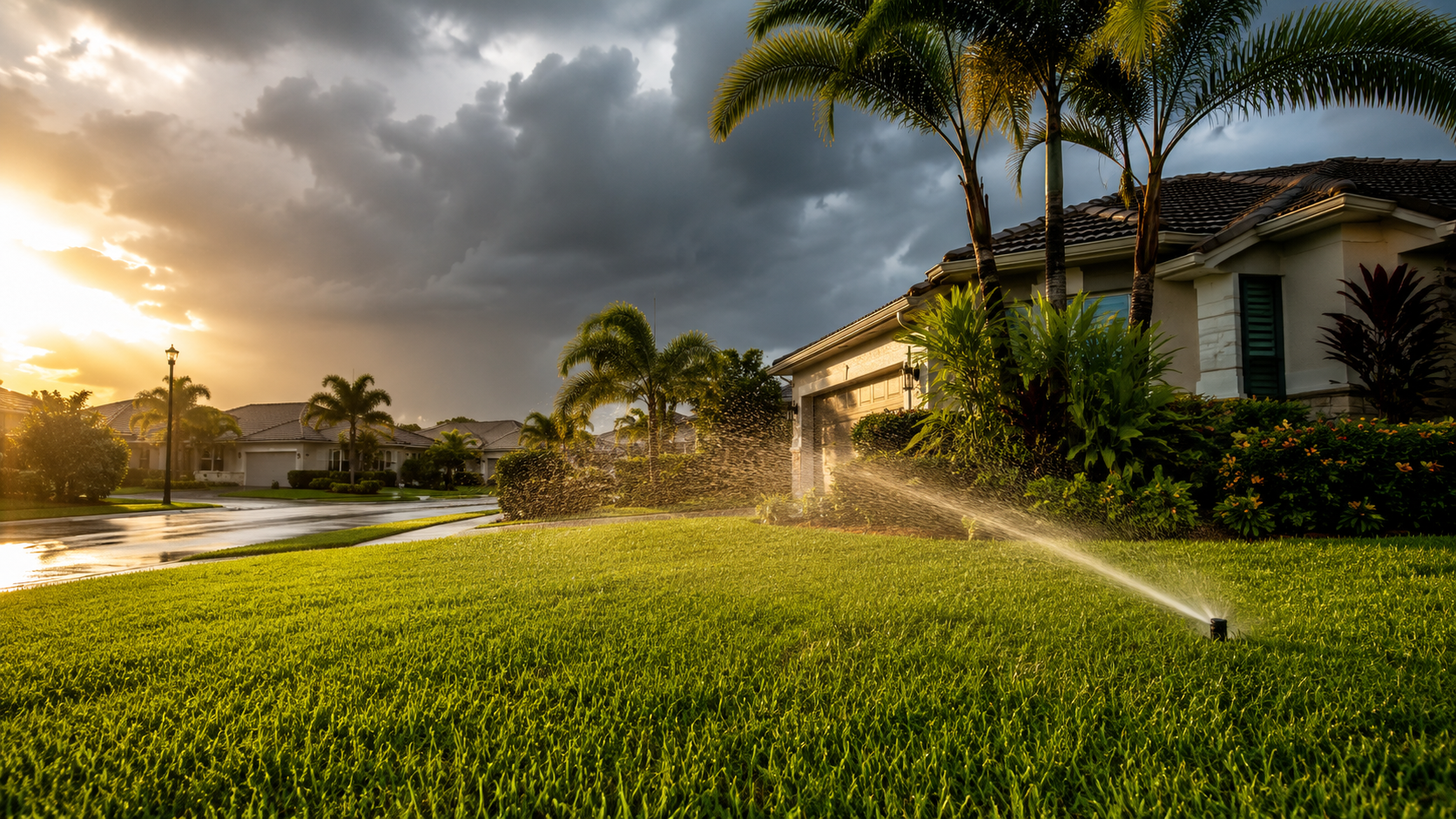
Summer in the Tampa Bay area brings afternoon thunderstorms, high humidity, and frequent rain. After a few wet days, it's easy to assume your lawn has all the water it needs.
But that's not always the case.
One neighborhood may receive two inches of rain while another just a few miles away gets almost none. Even when it does rain, not every storm provides enough moisture to keep your lawn healthy.
At Grass Monkey, one of the most common questions we hear during Florida's rainy season is:
"If it's been raining, should I still water my lawn?"
The answer isn't simply yes or no. The key is adjusting your irrigation based on how much rain your lawn actually receives—not turning it off completely.
Not All Rainfall Benefits Your Lawn
A quick afternoon shower may cool things down, but it doesn't always provide enough moisture to reach your lawn's root system.
Several factors determine how beneficial rainfall is, including:
- How much rain actually fell
- How quickly it fell
- Soil type
- Drainage conditions
- Sun exposure
- Recent temperatures
A heavy downpour can create runoff before water has time to soak into the soil, while a light shower may only wet the surface.
That's why it's important to monitor your lawn—not just the weather forecast.
Don't Turn Your Irrigation Off for the Entire Rainy Season
One of the biggest mistakes Florida homeowners make is shutting their irrigation system off completely once the summer rains begin.
While there's no reason to irrigate during a rainstorm—or immediately after a soaking rain—your irrigation system still plays an important role throughout the summer.
Florida's afternoon storms are unpredictable. Some days your lawn may receive plenty of rainfall, while other days your neighborhood may miss the storms altogether.
Instead of turning your irrigation off, adjust your schedule based on actual rainfall and soil moisture. This helps maintain consistent moisture and prevents your lawn from becoming stressed when the rain stops.
Overwatering Can Be Just as Harmful
While underwatering can stress your lawn, too much water creates problems of its own.
Overwatering can lead to:
- Shallow root systems
- Lawn disease
- Poor soil oxygen
- Increased weed pressure
- Yellowing grass
- Weak, unhealthy turf
The goal isn't to water more—it's to water smarter.
A healthy lawn benefits from periods where the soil begins to dry before the next irrigation cycle.
Florida's Rainy Season Can Increase Disease Pressure
Summer rainfall is great for keeping lawns green, but prolonged moisture also creates ideal conditions for fungal diseases.
Common Florida lawn diseases include:
- Dollar Spot
- Gray Leaf Spot
- Leaf Spot
- Root diseases
These diseases thrive when grass blades stay wet for long periods, especially during warm, humid weather.
Proper irrigation management is one of the easiest ways to reduce disease pressure while maintaining healthy turf.
Rainy Season Also Brings Increased Lawn Pest Activity
Summer isn't just prime time for lawn diseases—it's also when several lawn insects become more active.
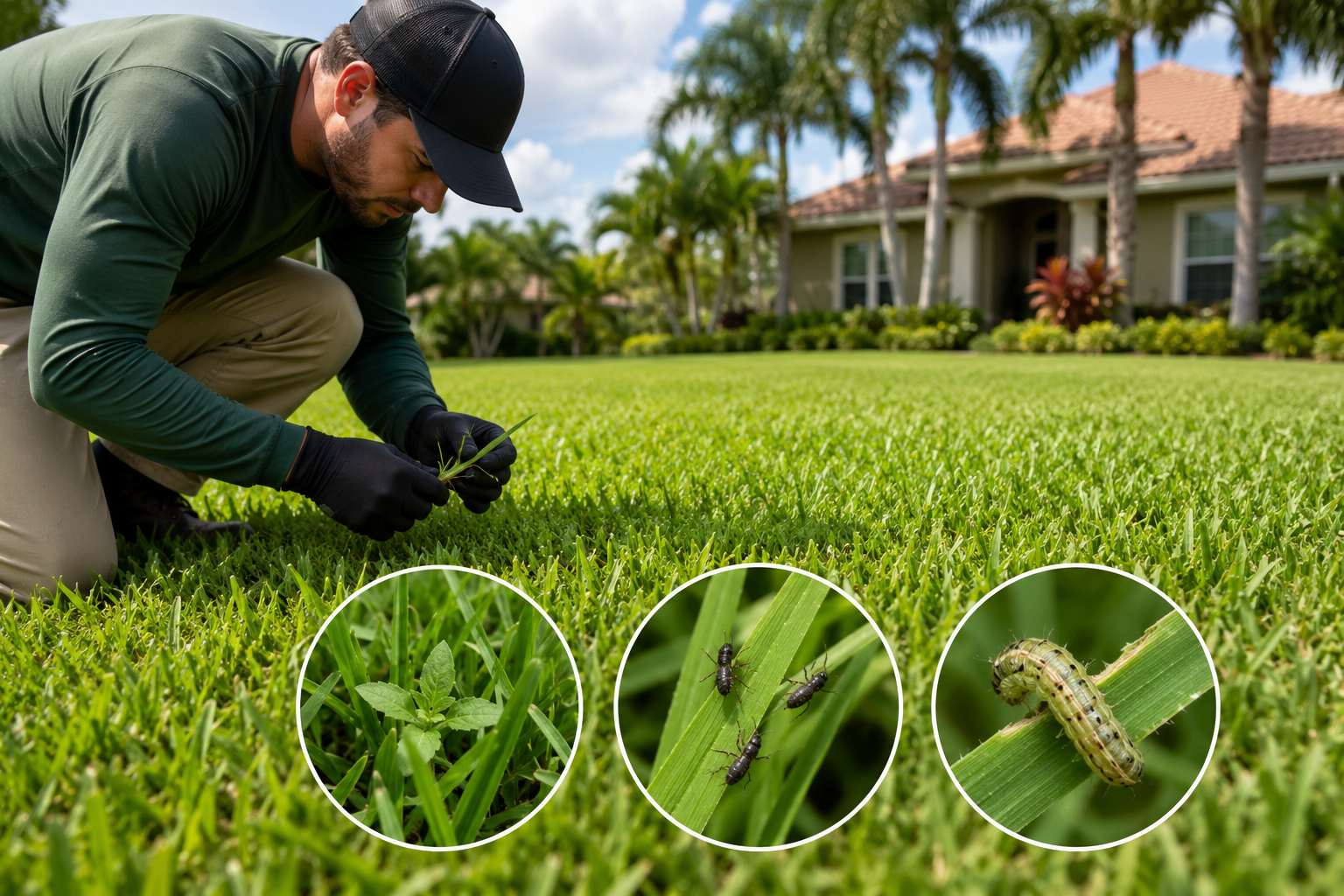
One pest we commonly monitor is the sod webworm.
Sod webworm caterpillars feed on grass blades, creating irregular brown patches that homeowners often mistake for drought stress or disease.
Because heat stress, disease, and insect damage can all look very similar, professional monitoring helps ensure the correct problem is identified before unnecessary treatments are applied.
Adjust Your Watering Schedule—Don't Ignore It
Rather than watering on autopilot, let rainfall determine your next irrigation cycle.
If your lawn has received a thorough soaking, it's perfectly fine to skip your next scheduled watering.
However, once the soil begins drying out, your irrigation system should resume to maintain healthy turf.
Most Florida lawns perform best with about 1 inch of water per week, including both rainfall and irrigation.
The goal is consistency—not constantly running your sprinklers or leaving them turned off for weeks.
Water Early in the Morning
When irrigation is needed, timing matters.
The best time to water is early in the morning.
Morning watering helps:
- Reduce evaporation
- Allow water to reach the root zone
- Give grass blades time to dry
- Reduce the risk of fungal diseases
Signs Your Lawn Needs Water
Even during Florida's rainy season, your lawn may still need supplemental irrigation.
Watch for:
- Grass that doesn't spring back after walking across it
- Blue-gray discoloration
- Wilting grass blades
- Dry or thinning areas
- Soil that's dry a few inches below the surface
These are signs your lawn may not be receiving enough moisture, even if it's been raining nearby.
Smart Irrigation Helps Everything Else Work Better
A properly managed irrigation schedule doesn't just keep your lawn green.
It also helps:
- Develop deeper root systems
- Improve drought tolerance
- Reduce disease pressure
- Increase fertilizer effectiveness
- Support healthier turf
- Improve your lawn's ability to recover from stress
Professional lawn care and proper irrigation work together to produce the healthiest results.
Let Grass Monkey Help You Find the Right Balance
Florida weather changes quickly. One week your lawn may receive several inches of rain, while the next your neighborhood misses every afternoon storm.
That's why successful lawn care isn't about simply turning your sprinklers on—or off. It's about adjusting irrigation based on actual conditions while keeping an eye out for diseases, insects like sod webworms, and other seasonal challenges.
At Grass Monkey, we monitor your lawn throughout the growing season, helping identify problems early and providing professional fertilization, weed control, disease management, and pest monitoring designed specifically for Florida lawns.
If you're unsure whether your lawn needs more water, less water, or professional attention, we're here to help.
Contact Grass Monkey today to learn more about our lawn care programs and keep your lawn healthy through every Florida season.